Winter 2026 Model UN Training Conference
By Cathy Sebastian, GCDC Program Assistant
On Friday, March 7th, 2026, 200 participants, including students, educators, guests, and partners, gathered at the Pan American Health Organization (PAHO), the Regional Office for the Americas of the World Health Organization (WHO), for the Global Classrooms DC Winter Model UN Training Conference. Middle and high school students from ten schools across the Washington Metropolitan Area convened to engage in simulated United Nations committee work, strengthening their Model UN skills and deepening their understanding of pressing global issues.
Attendees were welcomed to the PAHO headquarters, located at 525 23rd Street, NW, Washington, DC, a fitting venue for a conference centered on global health and international cooperation. UNA-NCA President Paula Boland opened the ceremony with remarks reflecting on UNA-NCA's longstanding commitment to educating students and youth about the United Nations and the vital UN-US partnership, particularly across the DMV region. She underscored the importance of equipping the next generation with the knowledge and tools to engage meaningfully with the work of the United Nations, and expressed her enthusiasm for bringing students into a space as significant as PAHO. President Boland also extended her gratitude to PAHO for their continued partnership, before warmly introducing the next speaker.
PAHO Deputy Director Mary Lou Valdez then addressed the audience, offering a warm welcome to all participants. She spoke about PAHO's rich history as the world's oldest international public health agency and its enduring mission to protect and promote the health of people across the Americas. Deputy Director Valdez emphasized the importance of collaboration and collective action, noting that confronting the region's most pressing health challenges requires working together across borders, sectors, and communities. Her remarks resonated deeply with the spirit of the conference, reinforcing for student delegates the real-world relevance of the diplomacy they were about to practice.
The opening ceremony set an inspiring tone for the day ahead, connecting student delegates to the real-world work of the United Nations and its specialized agencies before they headed into their respective committee rooms.
World Health Organization (WHO) Committee
Under their leadership, student delegates representing different WHO member states engaged in lively and informed discussion, bringing diverse perspectives to the table. The committee sessions reflected the spirit of international cooperation that underpins the United Nations' mission, with students actively working towards collaborative solutions.
The UNSC committee was chaired by Peter Chiu, a Program Assistant with UNA-NCA. The backroom was coordinated by Crisis Director Aidan Fedorochko and Crisis Staffer Ryan Oh, both graduate students at George Mason University. The leadership skilfully managed the rigorous demands of a Security Council simulation, guiding delegates through the procedural and substantive complexities of one of the UN's most consequential principal organs. According to Amy Trenkle, an educator at Alice Deal MS, her students described this as the “best backroom ever.” 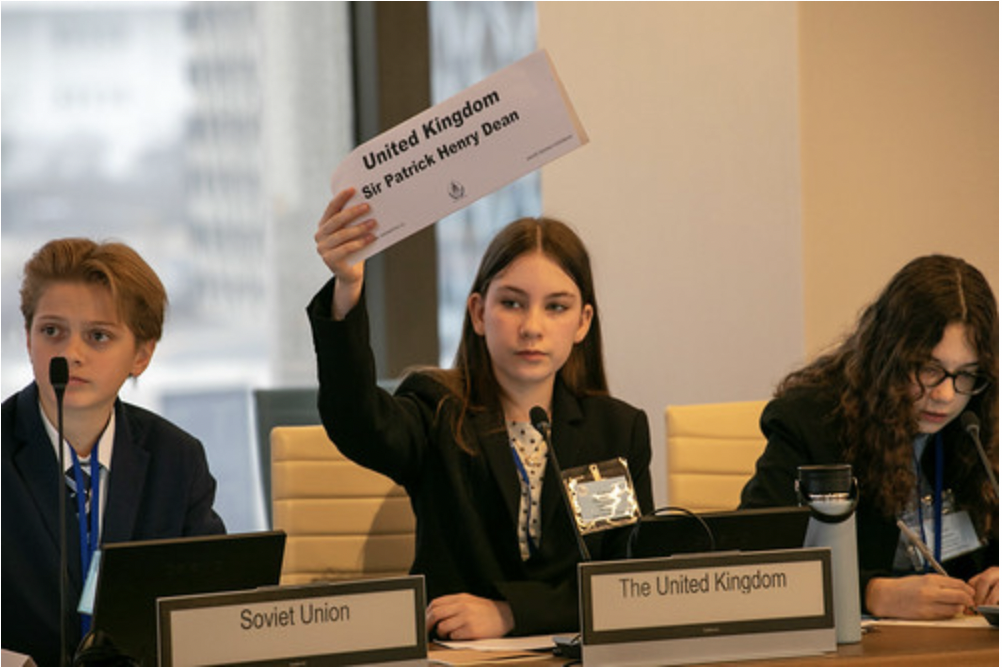 Historical UN Security Council Committee
Furthermore, Dr. Andrea Vicari, Chief of the Infectious Hazard Management Unit at PAHO, offered real-world insights and expertise during the debate. Delegates engaged in high-level debate, demonstrating a strong command of parliamentary procedure and international relations. The committee's historical framing provided rich context for students to analyse past global crises and apply diplomatic thinking to their resolutions. As with the WHO committee, the progression between sessions was evident, as students grew more confident and solution-oriented as the day unfolded.
Educator Session
Concurrent with the afternoon committee sessions, UNA-NCA hosted a dedicated Educator Session . Scott Rechler of LearnServe International generously gave his time to speak with educators, sharing insights on global education and service learning. He facilitated a meaningful discussion on implementing global education curricula in classrooms, drawing on LearnServe's work supporting young people in developing leadership and social impact skills. Many valuable insights emerged from the conversation, including approaches to experiential global learning and strategies for connecting classroom content to real-world issues, empowering students to be creative and impactful in their communities.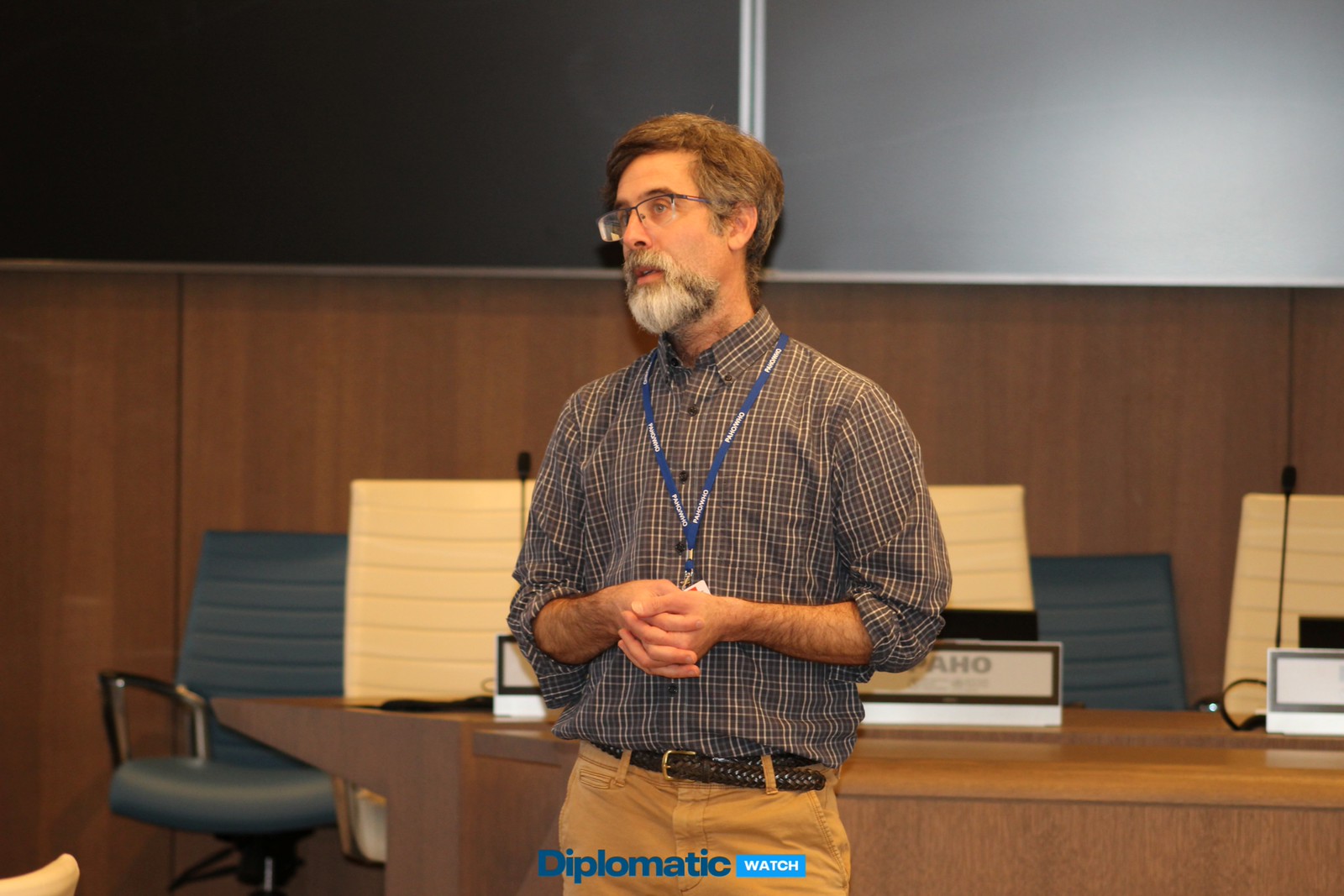 Scott Rechler, LearnServe International
Closing Ceremony and Awards
The Closing Ceremony featured the presentation of committee awards, recognizing the outstanding diplomatic efforts and contributions of student delegates across both committees.
WHO Committee Awards: Cuba received Best Delegate, the United Kingdom and Thailand were recognized as Outstanding Delegates, and Portugal and Haiti received Honourable Mentions, and Cambodia received a verbal commendation.
Historical UNSC Committee Awards: Indonesia was awarded Best Delegate, the United Kingdom and the Soviet Union were recognized as Outstanding Delegates, and the United Arab Republic and the United States received Honourable Mentions.
Staff, volunteers, and partners were thanked for their instrumental roles in making the event a success, before schools were formally dismissed.
A Day of Learning and Diplomacy
The 2026 Global Classrooms DC Winter Model UN Training Conference at PAHO exemplified UNA-NCA's enduring commitment to global education and youth empowerment. The conference offered an unparalleled experiential learning opportunity, connecting young people in the DC Metropolitan Area to the real work of international diplomacy.
From first-time participants navigating the WHO committee to advanced delegates tackling the complexities of the Security Council, students across skill levels left the day with stronger critical thinking, public speaking, and collaborative problem-solving skills. UNA-NCA extends its deepest gratitude to PAHO for its continued partnership, to the dedicated committee chairs for their outstanding leadership, and to all the educators, students, and volunteers who made this conference a success.
See Photos Slideshow by PAHO Here!See Photos by Diplomatic Watch Here!