

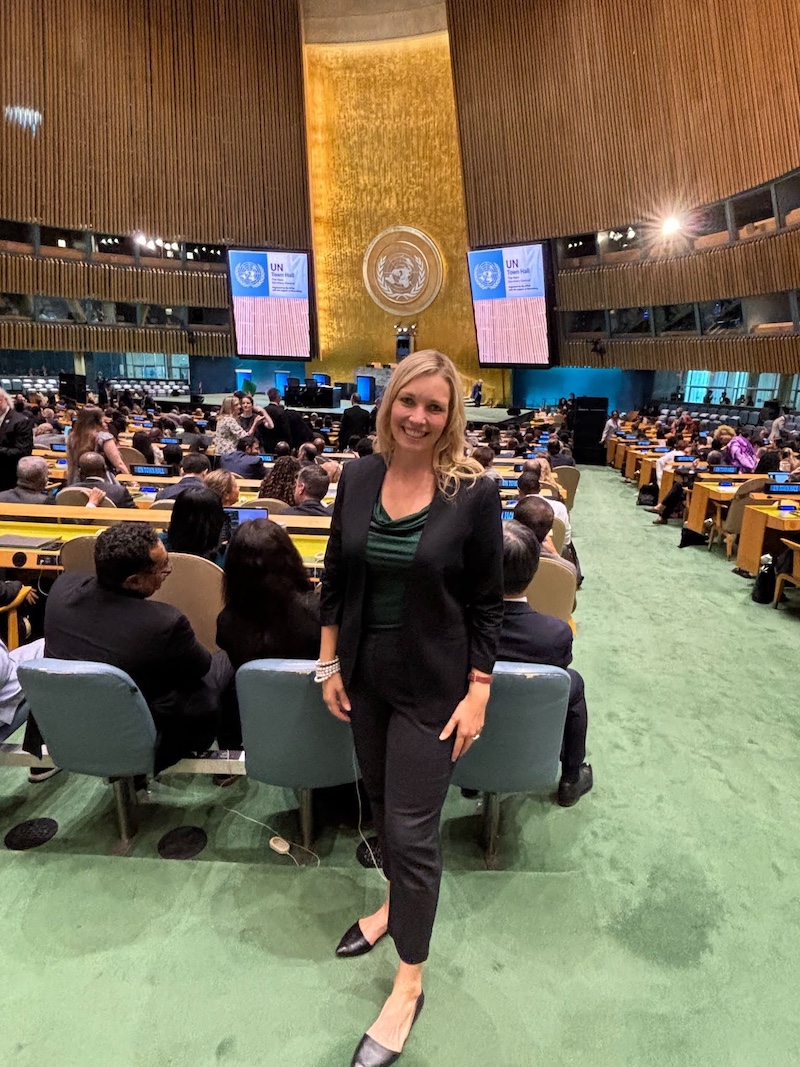
 UNA-NCA Board Member Kristen Hecht represented the chapter at the town hall, which featured:
- Michelle Bachelet of Chile (former president of Chile, former UN High Commissioner for Human Rights, and former Executive Director of UN Women)
- María Fernanda Espinosa of Ecuador (former President of the UN General Assembly)
- Rafael Mariano Grossi of Argentina (Director General of the UN International Atomic Energy Agency)
- Rebeca Grynspan of Costa Rica (Secretary-General of the United Nations Conference on Trade and Development and former Under-Secretary General of UNDP)
- Carolyn Rodrigues-Birkett of Guyana (Guyana’s Permanent Representative to the United Nations and former Minister of Foreign Affairs)
- Macky Sall of Senegal (former President of Senegal and former Chairperson of the African Union)
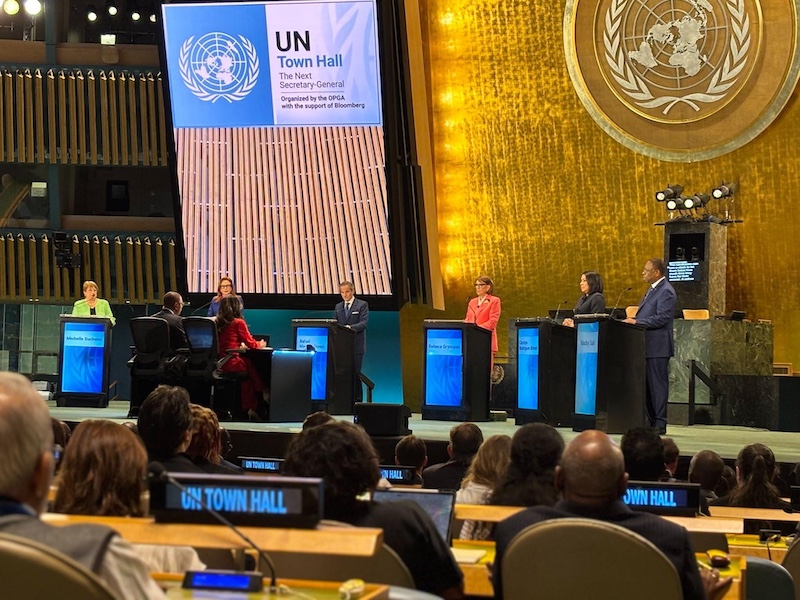 Notably, four of the six candidates were women, reflecting the widespread view that, after eight decades and nine male Secretaries-General, it is time for the United Nations to appoint its first female Secretary-General. Candidates noted that greater gender representation at the organization's highest level would not only mark a historic milestone but also demonstrate the UN's commitment to inclusive leadership and inspire women and girls around the world.
While each candidate brought distinct leadership experience, several common themes emerged throughout the discussion. Candidates emphasized restoring trust in the United Nations through meaningful reforms that would make the organization more agile, effective, and accountable; strengthening multilateral cooperation amid rising geopolitical tensions; leveraging partnerships with the private sector and
 civil society; harnessing technology and artificial intelligence responsibly; and ensuring the UN delivers tangible results for people on the ground. Many also highlighted the importance of defending human rights, advancing climate resilience, and rebuilding confidence that the UN can effectively address today's most pressing global challenges.
The selection process will continue over the coming months through additional informal dialogues and consultations with Member States. The Secretary-General is appointed by the UN General Assembly upon the recommendation of the Security Council, where any of the five permanent members may exercise a veto over a candidate. The successful candidate will assume office on January 1, 2027. Those interested in following the process can watch recordings of the candidate dialogues, review candidate vision statements and CVs, and learn more about the appointment process through the United Nations' Secretary-General selection website. As the United Nations enters its ninth decade, the selection of its next Secretary-General is about more than choosing a new leader; it is an opportunity to reaffirm the world's commitment to multilateralism, strengthen international cooperation, and chart a bold course toward a more peaceful, equitable, and sustainable future.